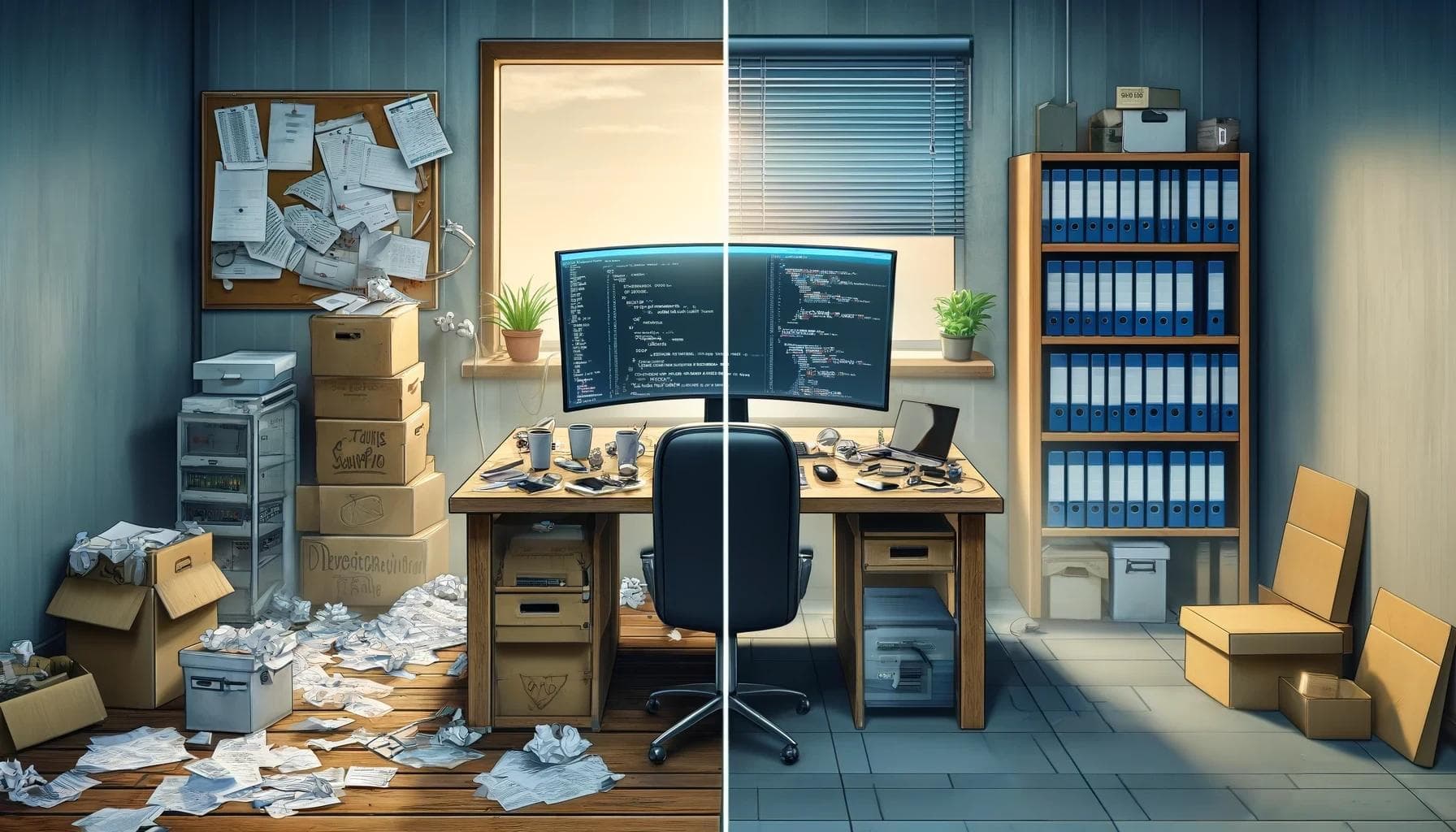
You wouldn't deploy untested code to production. So why do you deploy untested ideas straight into your codebase?
Every feature starts as a guess. Maybe it's an informed guess, maybe it's a CEO's napkin sketch — but it's still a guess. And when you build that guess directly into your main project, you're betting the entire system's stability on it working out. Most teams do this because a separate proof of concept feels expensive. Extra environments, extra time, extra process.
Here's what's actually expensive: ripping out a feature that was integrated too early, broke three other things, and now lives in your codebase like a tumor nobody wants to touch.
The Case for Treating Every Feature as a PoC
Build it standalone first. Test it in isolation. Validate it with real feedback before it touches your production code. This sounds like overkill until you've lived through the alternative.
I've watched teams spend weeks debugging issues that traced back to a "quick feature addition" that was never properly validated. The integration itself introduced coupling, edge cases, and performance regressions that nobody anticipated — because nobody tested the feature in isolation first.
When you build a feature as its own PoC, you get permission to experiment aggressively. Developers try bolder approaches because the risk is contained. If the experiment fails, you throw away a branch, not a sprint.
"But That's Too Expensive"
That's what people say about pair programming too. Two developers on one problem? Wasteful. Except every study shows it produces higher quality code, faster onboarding, and fewer bugs. The math works because you're measuring the wrong thing when you count hours instead of outcomes.
Feature-level PoCs work the same way. The upfront cost is real — separate environments, dedicated testing time, maybe a longer path to release. But the downstream savings compound: fewer bugs reaching production, less rework, more predictable timelines, and features that actually work the way users need them to.
How to Start Without Overthinking It
Pick a non-critical feature. Build it outside your main project. Get feedback. Integrate it cleanly. Then do it again. After three or four cycles, you'll have a sense for when a PoC is worth the investment and when a feature is simple enough to go direct.
The key is making integration planning part of the PoC from the start. A proof of concept that can't be cleanly merged is just a prototype that wastes time.
The teams that build the best software aren't the ones that ship the fastest — they're the ones that validate before they integrate.